pretty fancy

The Saltwater Twin has been nominated for the “Inspiring Blog” and the “One Lovely Blog” awards!

Thank you to Jane, who blogs at In My Mother’s Room: A Memoir, for the nomination. On her own lovely-awarded blog, Jane details what it was like to care for her terminally ill mother during the last year and a half of her life.

With this nomination comes the instruction to share 7 facts about myself and to nominate 15 bloggers whose blogs I enjoy. So here we go.

1. I’m a little bit cocky about my thrift shopping skills.

2. I have finally discovered what all the fuss over yoga is about.

3. I once rescued an ailing bat I found on my back porch. It was cute and terrifying.

4. If there were such a thing as past lives, I think I spent at least one as a sailor.

5. I would like to learn how to surf. And make homemade sushi.

6. Some of my favorite books are Peter Pan, Lolita, Tess of the D’Urbervilles and The Poisonwood Bible.

7. When The Saltwater Twin gets published, I’m buying a fancy dress and throwing a glittering party.

And now for some more interesting, quirky, provocative, mouthwatering, inspiring places to visit:

nikkipatin.com

amandarountree.com

iamurbangateways.wordpress.com

veganbloggersunite.wordpress.com

nopenotfashion.wordpress.com

cuteoverload.com

manhattan-nest.com

moveboulder.org

amyandme.wordpress.com

sunyuh.wordpress.com

chimeragirl2010.wordpress.com

kelseygillespy.com

bittersweetblog.wordpress.com

veganhomemade.wordpress.com

thewayofreturning.com

Thank you, friends. A new post will be on its way soon!

Maia

Letting Go, Part 1

The last chapter in The Saltwater Twin (don’t hold your breath, friends, I’ve months to go yet) is going to be about letting go. It’s something I wish I were better at. It’s a little bit of a pickle, actually, because as a writer, it’s sort of my job to notice and hold and catalogue details, but as a human being who prefers to feel mostly happy and relatively untortured, I find letting go to be a useful skill. It’s something I keep having to learn, maybe the most important thing. As such, it seems like a fitting topic for the last chapter of a book that is something of a piecemeal memoir of my whole life so far.

It’s been a challenging month. (More on that in the next post.) This old song has been playing in my head. I couldn’t remember all the words, but I knew it was Irish; I thought The Clancy Brothers sang it. Yesterday I went online to find a version to download. Turns out “The Parting Glass” dates back to at least the 18th century, and The Clancy Brothers did often play it to end their concerts. There are different versions, of course, because it is an old, old song with, as it turns out, both Irish and Scottish roots, but here are a couple of the verses that are often sung:

Of all the money e’er I had,
I spent it in good company.
And all the harm I’ve ever done,
Alas! it was to none but me.
And all I’ve done for want of wit
To memory now I can’t recall
So fill to me the parting glass
Good night and joy be with you all.

Oh, all the comrades e’er I had,
They’re sorry for my going away,
And all the sweethearts e’er I had,
They’d wish me one more day to stay,
But since it falls unto my lot,
That I should rise and you should not,
I gently rise and softly call,
Good night and joy be with you all.

Okay, so it makes sense why this song has been playing on the record player in my brain recently, since it’s about letting go – well, saying goodbye, anyway – for a short time or a long time or forever. The melody sounds sweet and old and wistful, like the song is trying to teach you how to let go gently before the last note fades. The Pogues did a rendition and The Wailin’ Jennys, The High Kings and, of course, The Clancy Brothers. I was listening to the latter when a thumbnail image in the margin caught my attention: “Bob Dylan: Thoughts on Liam Clancy.” I clicked. In the clip, Dylan tells a story about drinking pint after pint of Guinness with Clancy someplace in Greenwich Village when Clancy said to him, “Remember Bob, no fear, no envy, no meanness.”

Yes, I am now getting my life lessons from YouTube. Because that’s one of the best things I’ve ever heard. The best advice for writing and for life.

No fear. Yep. Fear suffocates. We are our best when we throw ourselves into our work wholeheartedly without worrying about the outcome. I, for example, don’t know what will happen when I finish this book. What if no one publishes it? No one reads it? What if I’m fooling myself that I have something worthwhile to say? There are a million what ifs. But I think I’m best, I’m smartest and happiest when I can let go of the fear that things won’t turn out the way I hope.

No envy. Yep. I’ve been reading a lot of essay and memoir while working on this book. The Saltwater Twin is a collection of personal essays, a new form for me. I want to get a sense of the ways it has been done, how best to assemble a collection of work, how to create a dynamic narrative arc from stories that felt random when they were happening, how to strike a satisfying balance between story and non-narrative (but hopefully still diverting) musings. Sometimes I envy the writers I’m reading. They’ve already published books. They already have fancy websites and checks from publishers and book signings with plastic cups of wine. That envy is a fruitless pursuit, and it leads, frequently, back to fear. Who am I to think I can do this thing?

No meanness. Ah. I like that meanness has multiple meanings. Meanness, as in unkindness, does not make good art. The voices that hiss “stupid” or “worthless” or “give up now” do not make me want to sit down and type. But neither does meanness as in stinginess. I can’t hold anything back. I want to give my whole self to the work – everything I have – and freely.  This goes for life, too, of course. You are a genius, Liam Clancy!

So, my lads and lasses, my comrades and sweethearts – letting go of fear, of envy, of meanness. Will you fill a glass and toast with me to that?
And Now, the Octopus

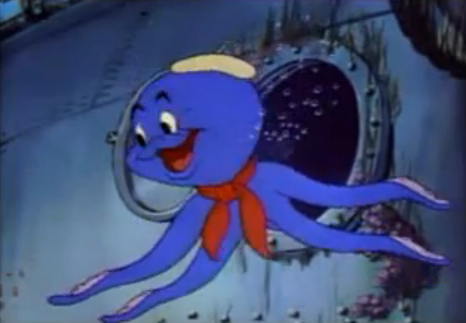
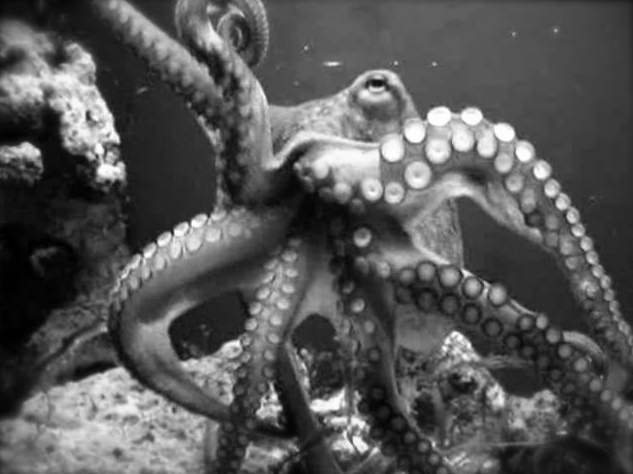
I’m working on a chapter that’s based on a monologue I performed a few years ago at Live Bait Theater in Chicago. Every summer, my friend Tekki, the artistic director of Tellin’ Tales Theatre, curates an evening of solo performance based on a theme. That particular year she titled the show “Potholes on the Path to Enlightenment,” and she asked us to write about an epiphany. That’s not really so hard, I thought: almost every story is about some kind of discovery – some little or big a ha! But she wanted it to be something pretty major, something that could, like, change your life. When I started working on the piece, I became a little obsessed with octopuses. For weeks, I read and wrote about octopuses. (By the way, octopuses is the correct plural – either that or octopodes. Octopi is frowned on by most references because the –pus derives from Greek and not Latin.) I wrote about an octopus I remembered from Sesame Street, which I watched as a kid. A man’s voice said, “And now, the octopus,” then this octopus swam around a tank for a minute, and that was it. Anyway, I was trying to write this piece about epiphany; I thought I should be writing about God, transcendence, the search for meaning, and I kept coming back to the octopus.

Figuring out what my brain is onto is one of my favorite parts of writing. The work is making clear the dot-to-dot of connections I’ve made in my head and finding a way to take the reader along on the journey. I don’t want to make it all too obvious or the reading won’t be any fun. But I can’t make it too obscure either – I can’t lead the reader into the woods and leave them with no trail to find their way back. I want the reader to make the discoveries I made in the living and the writing of the story – in this piece, for example, how the search for God and meaning relates to octopuses (also Clash of the Titans and Esther Williams).

An epiphany is an insight that comes about because of something ordinary. I probably watched my octopus on Sesame Street every day. It was ordinary. But the octopus itself, all rippling flesh and unfurling suckers was extraordinary. The octopus was an epiphany billowing across our black and white TV.  It said, wake up! Look at what’s out here in the world. Look and look and look.

Tell me, friends. What is it that makes you wake up and look?

the courage of your lungs

It’s June already. Summer is breathing down our necks. How did this happen? I’ve been working hard all spring, but teaching a full load of classes and workshops (oh, and trying not to be a hermit because that never ends well) has meant that I’ve only completed one 7,000 word chapter, “Law of the Jungle” over the past several weeks. But summer’s nearly here, and that makes me feel energized and alive and ready to run. I know just a few weeks ago I wrote a post “In Praise of Slowness,” but now I’m kind of in the mood to go fast. Not a teeth-gritted-when-is-this-hell-going-to-be-over kind of fast, but the kind when your body just begs you to run.

One afternoon this spring I asked the students in my after school program to write images that showed relationships. They wrote of grandmothers dancing at family reunions, a woman chasing a man and throwing her high heels at him, a father marveling over his infant son’s feet. One student wrote: Two girls running, the wind blowing their hair back.”

(If you want to, you can pretend you’re listening to the “Chariots of Fire” theme as you read the rest of this post.)

That’s the kind of running I mean – when your lungs ache and your legs get a mind of their own, running like a kid, running toward nothing. The goal is not the goal, you just open up and run like a smiling dog on the beach. So that is my summer plan. I have a goal in mind. It’s a big goal, a lot of chapters. But I’m going to set my mind on running for the joy of running and see how that works out.  And when my lungs ache I will remember running in my college town through fields of corn you could practically hear growing, wisps of clouds in the sky, worn pavement rising to meet my feet.  I’ll revel in my fleet feet, my capacity to move and breathe and feel the sun and wind on my skin.

This summer I’m running. Who’s in?

You could go in any direction, fast or slow as you wanted, fighting the wind if you felt like it, seeking out new sights just on the strength of your feet and the courage of your lungs.

                                                                                                        – Jesse Owens

listen

I’m working on “Law of the Jungle” which I’m thinking is going to be chapter three of The Saltwater Twin, and I feel like it’s taking forever. It’s one of those essays I’m pretty much figuring out as I go along. With chapters like this, I start out with a sense of the general direction, but the writing is investigative, exploratory, the terrain shifting. I’ll get an impulse to include some image or anecdote, then have to figure out why and how it’s connected to the other stuff I’ve put in. It’s like assembling a puzzle but first having to find the pieces; there’s a lot to sift through, and I have to ask each piece where it belongs and listen to what it says.

My mind is a noisy place sometimes…fine, almost all the time. Today, for example, it is saying that the cemetery I saw on my drive out to Palatine, IL to teach five workshops looks beautiful in the rain and also I love cemeteries and also I’m remembering certain magical cemeteries in Paris and New Orleans and walking through them when it was cold and when it was hot and my mind is saying remember, I have to get a cashier’s check to send in for my health insurance and should I get some vegan cake and also I need to do some fairy tale research for the Lyric Opera study guide maybe on Bettelheim and I’m recalling how my neighbor’s bitchy bunny sounded when he hissed at me when I put his salad in his cage and I didn’t even know bunnies hissed and my mind is also saying rain! I love the rain, also I need to get to the gym and why is it so hard and also I want to sleep and also what if after all this work this book never gets published, what then and also what do people eat on backpacking trips because I’m going backpacking for the first time ever in a few weeks? It’s like my brain is a concert hall where the orchestra is tuning up and the lady next to me is unwrapping candy and I’m in the middle of 360 degrees of conversations about workdays and affairs and trains, and amid the noise, I have to listen for the voice that is telling me the story of the thing I’m trying to write.

It helps to remember a quote I love from Martha Graham.  (Ever since I read it a few years back, I’ve pretty much plastered it all over the place, including my artist page at urbangateways.org, the non-profit that sent me out to do those Palatine workshops.) Graham says,

There is a vitality, a quickening that is translated through you into action and because there is only one of you in all of time, this expression is unique. And if you block it, it will never exist through any other medium and be lost. The world will not have it. It is not your business to determine how good it is, not how it compares with other expression. It is your business to keep it yours clearly and directly, to keep the channel open.

First of all, I love the word and concept of “a quickening,” a coming into being, coming alive. Second, she’s so clear: your job is simply to translate your own voice.

I like it when the things I want or need to do to earn a living or achieve something I want to achieve are also the things I believe I need to learn to be a better human being. This lesson is about listening, getting still, paying attention to what matters in the moment. Trusting your voice to emerge. Those are good things to learn.

How do you pay attention to what matters? And what does your voice say in the stillness?

tarry a moment

My evil genius Procrastination has whispered me to tarry ’til a more convenient season.
Mary Todd Lincoln

Oh, Mary Todd, you were so right.  Procrastination is an evil genius. Once I procrastinated by looking up procrastination. It derives from the Latin, procrastinare, to delay until tomorrow. Synonyms: delay, put off doing, adjourn, be dilatory, cool, dally, dawdle, defer, drag, drag one’s feet, give the run around, goldbrick, hang fire, hesitate, hold off, lag, let slide, linger, loiter, pause, play a waiting game, play for time, poke, postpone, prolong, protract, retard, shilly-shally, stall, stay, suspend, tarry, temporize, wait…

I am actually not procrastinating today.  At least not right this minute. I’m writing this blog post just like I said I would, and then I’m going to work on revisions for chapters one and two of The Saltwater Twin. But sometimes I do.  Procrastinate.  It happens. And it comes in so many flavors. Here, for your delectation, or in case you are interested in procrastinating yourself, are some of my favorite interwebs spots to visit when I ought to be doing other things.

At the speech accent archive you can listen to people speaking English with almost any accent under the sun. Why do I love this so much?  I don’t know.  But I do.

Here are the sounds of so many kinds of animals.  Extra fun: turn up the volume if you have a dog (maybe even a cat) and watch him cock his head to the side. Also, here’s where to find out what people say in different languages to mimic animal sounds.

Watch the All Blacks rugby team doing the haka on youtube. This makes me very happy.


At freerice.com you can take quizzes and donate rice.  Genius.

Browse etsy.com to buy one of a kind things and support artisans and craftspeople all over the world.


Look at cute animals.  It raises your endorphins. So it’s actually good for you. And it will probably help you do a better job on whatever it is you finally intend to get around to doing.

I think a little procrastination is okay. Growing crops season after season without a break depletes the soil. Farmers let a field lie fallow to allow the land to renew itself. So I try not to be mad at myself when procrastination happens, and I try to build in some time for it so I don’t snap and go on a three-day bender.

How about you?  Favorite flavors of procrastinating?

mythical creatures

One of the definitions of mythology is “a set of stories, traditions, or beliefs associated with a particular group or the history of an event, arising naturally or deliberately fostered.” I think we each have our own personal mythologies. They both arise naturally from the circumstances of our lives and they are fostered – maybe not deliberately, but fostered nonetheless – by each of us, depending on what we need to remember and how we need to remember it.

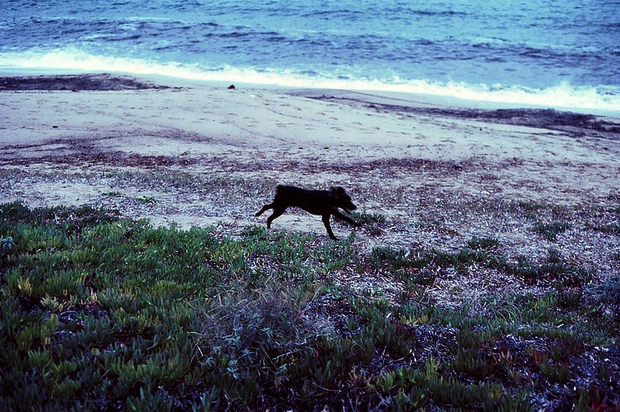
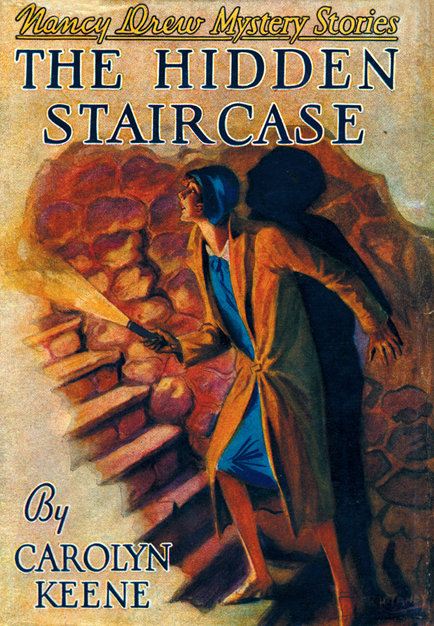
In the traditional sense, of course, from angels to zombies, mythical creatures abound in folklore around the world.  But just as a particular culture’s myths explain a society to itself, our personal myths explain ourselves to ourselves. We tell stories that make sense of who we are and the time we’ve spent on earth, stories we populate with beings that wax mythic in our minds. Each of us has our own creation story, our own explanations for how the world works, our own hero’s journey and our own idiosyncratic pantheon of mythical creatures.  Accordingly, just as Medusa and the Phoenix are mythical creatures, so are Nancy Drew and the Cheerleader I wanted to be in seventh grade and the Fuzzy Black Dog I found in Back of the Yards (who, by the way, I named Phoenix).  These entities are “mythical” because they’re larger-than-life characters that populate the stories we tell and retell about ourselves, and “creatures” because in the telling they become either more-than or not-quite human.  We keep coming back to them.  Whether persecutors or protectors, they become important in our understanding of why things are the way they are, in our understanding of ourselves.

The full title of this book I’m writing is The Saltwater Twin and Other Mythical Creatures. In it, I introduce some of my own mythical creatures, describe the circumstances that brought each of them to life and tell what part they played in my story after that.

I hope that my own “set of stories, traditions and beliefs” will resonate with readers, each with their own collection of myths and pantheon of mythical creatures.

What are yours?

good habits

We first make our habits, and then our habits make us.
John Dryden

150 minutes/day x 6 days = 15 hours/week

That’s my writing formula. I’m currently working on getting in 15 hours of writing a week. My goal is to get to 16, two full workdays worth.  It feels like a good number.

I started with 10 minutes a day.  This was a few years ago.  Sitting down to write was a challenge. It meant trudging through difficult drafts and fending off the barrage of nasty voices that said I was wasting my time, I’d never be any good, I was deluded if I thought I could write something anyone would ever want to read. So naturally, I dragged my heels.  But I wanted to write things.  I wanted to start them and finish them. And the ideas banging around my brain were quite rowdy and insistent.  So I started with a goal of writing for 10 minutes a day.  That felt doable.  Easy, even. 10 minutes a day, 6 days a week. Done and done. With this small change, something big shifted.  Instead of feeling overwhelmed by the distance between what I wanted to accomplish and where I was at any given moment, I started to feel competent and capable of even bigger things.

I had read somewhere that it takes three weeks for a new habit to take root.  So I decided that after 3 weeks of writing 10 minutes a day, I would graduate to 15 minutes, then 20 and so on until I made it to 160 minutes a day, 6 out of 7 days – in other words, 16 hours a week. Again, adding just 5 minutes every three weeks felt doable, easy even. Since then I’ve read that the 21-days-to-a-habit number is pretty arbitrary, and they think it’s more like 66. Nonetheless, I’ve made it to 15 hours a week, 3 weeks at a time. Sometimes it’s still tough to sit down and do the work, but sometimes I can’t wait to get cracking. Oh, also there are prizes for reaching a 3-week benchmark. I like prizes.

Kooky though it may seem, this strategy has made me smarter about how I use my time. As a freelance teaching artist, I have lots of unstructured time that I have to divvy up to accommodate the various tasks I need to accomplish. Too often, writing used to be last on the list, squeezed into whatever time was left over, after lessons were planned, bills paid, laundry washed.  Now it’s the first thing I find time for.  I look at my day and see, oh, I’m teaching two classes and I have to plan a lesson, so when can I write?  Or, I have a really full week ahead, so I’ll have to get in lots of writing hours this weekend.  Some days it’s just not possible to fit in 150 minutes (2 ½ hours for the arithmetically challenged), but the idea is to make sure my daily totals add up to my weekly goal. And I’m happy to say it’s become a habit.

Tell me how you carve out space and time for your work.  How do you make it a habit?

finding the trail

Image

Friends, I love me some research.

It’s just so satisfying finding stuff out about stuff.

While writing this latest chapter, I’ve looked up the paleo-diet which recommends that you eat the way our Paleolithic hunter-gatherer ancestors supposedly did (my favorite proponent is this guy whose catchphrase is “Die biting the throat;” you can get it on a t-shirt!), Isaiah 11: 6-8 (The wolf shall lie down with the lamb and so on), Quakers, how long it takes to grill a rare steak, if fish are capable of feeling pain, evolution and natural selection and, as I wrote about in this space a couple weeks ago, predatory animals, especially the ones that sometimes eat humans.

I’ve come to think that even if it seems like procrastination at times, research is a fundamental part of my writing process.  I’m trying to emulate one those super wilderness scouts who can look at the-ever-so-slightly-bent twig or the barely-there footprint and gauge exactly how far off whatever you’re looking for is and what it had for lunch.

Admittedly, I do sometimes get a bit sidetracked.  The other day I was looking up Edward Hicks’ famous painting “The Peaceable Kingdom,” which my mom always used to take us to see at the National Gallery of Art in D.C., and which always fascinated me not only because of the animals’ really odd expressions but also because they were playing with those weird-looking, early American folk art babies…Image

and then I had to read about Quakers because Edward Hicks was a famous Quaker and then I started thinking, wow, I’ve always thought Quakers were really cool and maybe I should be a Quaker and then I started looking up Quaker meetings in Chicago —

that was maybe a tich off the beaten path.

So I try to balance research and writing.  But when I stumble across some semi-hidden sign, catch a trace scent in the air that leads me to a brand new thought or connection or story, it’s really kind of thrilling.  I don’t know if I’ll find exactly what I’m looking for (a thorough understanding of why and how everything in the world universe is what it is and does what it does) but at least I’ll have an account of the expedition.

Adventures in Storytelling

This book writing thing is a long, solitary haul, and it gets lonesome in my living room.  So in an effort to take the edge off my self-imposed quarantine, I decided to read something.  In public.  I investigated storytelling nights around the city, and there are lots of them.  I recommend checking some out.  It’s a lovely way to spend an evening; it feels so pleasantly classic to be drinking a pint and listening to a story. Anyway, I was offered a spot at This Much Is True, a storytelling series at the Hopleaf.And despite being wicked nervous, last Tuesday night I read an excerpt from a chapter called We Got Spirit! It was fun. They liked it. I’m going to do more. I’ll keep you posted here.  Here is an excerpt from the excerpt:

In seventh grade, my desire to play an orphan in a touring production of Annie was supplanted by an ardent wish to become a cheerleader.  I coveted the little white socks and beribboned ponytails, the thigh-skimming skirts with those sharp kick pleats and the spankies they wore underneath that were neither underpant nor bathing suit but something far more exotic than either.  Cheerleaders intoxicated every boy above third grade. I, on the other hand, was socially awkward and bookish, but I thought I might have a chance of getting on the team because I could almost do the splits.  I mean, it was really close.  Unless you looked super carefully, you’d probably think I was completely doing them.  Also, I could land in the almost-splits from a cartwheel or jump. I didn’t excel at jumping in general; I was largely unsuccessful both at achieving much height and at executing the mid-air herkies and pikes. I was good at that Presidential Fitness flexed arm-hanging test where you had to hold your chin above a bar because I was gritty and didn’t let go of things easily. Anything that pitted grim determination against gravity, I was prepared to kick ass.  Jumping, however, outwitted me. I was very sad in seventh grade.  Maybe being sad makes it hard to get off the ground.

I wanted to be happy.  And there was something about cheerleaders that made it seem like they might know how. It wasn’t just that they got attention from boys – or guys as they were suddenly called, as in, do you like any guys in our class, because I think Matt Hendricks totally likes you.  By the way, this new development, among others – like needing to wear shorts under your skirt so no one would see your underwear by accident – was honestly a little bewildering to me. But with their bright colors and staccato claps and their “Ready, okay,” cheerleaders seemed to be truly okay and ready for whatever life intended to throw at them. It was a mystery I didn’t know how to unlock:  the mystery of cheer.