listen

I’m working on “Law of the Jungle” which I’m thinking is going to be chapter three of The Saltwater Twin, and I feel like it’s taking forever. It’s one of those essays I’m pretty much figuring out as I go along. With chapters like this, I start out with a sense of the general direction, but the writing is investigative, exploratory, the terrain shifting. I’ll get an impulse to include some image or anecdote, then have to figure out why and how it’s connected to the other stuff I’ve put in. It’s like assembling a puzzle but first having to find the pieces; there’s a lot to sift through, and I have to ask each piece where it belongs and listen to what it says.

My mind is a noisy place sometimes…fine, almost all the time. Today, for example, it is saying that the cemetery I saw on my drive out to Palatine, IL to teach five workshops looks beautiful in the rain and also I love cemeteries and also I’m remembering certain magical cemeteries in Paris and New Orleans and walking through them when it was cold and when it was hot and my mind is saying remember, I have to get a cashier’s check to send in for my health insurance and should I get some vegan cake and also I need to do some fairy tale research for the Lyric Opera study guide maybe on Bettelheim and I’m recalling how my neighbor’s bitchy bunny sounded when he hissed at me when I put his salad in his cage and I didn’t even know bunnies hissed and my mind is also saying rain! I love the rain, also I need to get to the gym and why is it so hard and also I want to sleep and also what if after all this work this book never gets published, what then and also what do people eat on backpacking trips because I’m going backpacking for the first time ever in a few weeks? It’s like my brain is a concert hall where the orchestra is tuning up and the lady next to me is unwrapping candy and I’m in the middle of 360 degrees of conversations about workdays and affairs and trains, and amid the noise, I have to listen for the voice that is telling me the story of the thing I’m trying to write.

It helps to remember a quote I love from Martha Graham.  (Ever since I read it a few years back, I’ve pretty much plastered it all over the place, including my artist page at urbangateways.org, the non-profit that sent me out to do those Palatine workshops.) Graham says,

There is a vitality, a quickening that is translated through you into action and because there is only one of you in all of time, this expression is unique. And if you block it, it will never exist through any other medium and be lost. The world will not have it. It is not your business to determine how good it is, not how it compares with other expression. It is your business to keep it yours clearly and directly, to keep the channel open.

First of all, I love the word and concept of “a quickening,” a coming into being, coming alive. Second, she’s so clear: your job is simply to translate your own voice.

I like it when the things I want or need to do to earn a living or achieve something I want to achieve are also the things I believe I need to learn to be a better human being. This lesson is about listening, getting still, paying attention to what matters in the moment. Trusting your voice to emerge. Those are good things to learn.

How do you pay attention to what matters? And what does your voice say in the stillness?

tarry a moment

My evil genius Procrastination has whispered me to tarry ’til a more convenient season.
Mary Todd Lincoln

Oh, Mary Todd, you were so right.  Procrastination is an evil genius. Once I procrastinated by looking up procrastination. It derives from the Latin, procrastinare, to delay until tomorrow. Synonyms: delay, put off doing, adjourn, be dilatory, cool, dally, dawdle, defer, drag, drag one’s feet, give the run around, goldbrick, hang fire, hesitate, hold off, lag, let slide, linger, loiter, pause, play a waiting game, play for time, poke, postpone, prolong, protract, retard, shilly-shally, stall, stay, suspend, tarry, temporize, wait…

I am actually not procrastinating today.  At least not right this minute. I’m writing this blog post just like I said I would, and then I’m going to work on revisions for chapters one and two of The Saltwater Twin. But sometimes I do.  Procrastinate.  It happens. And it comes in so many flavors. Here, for your delectation, or in case you are interested in procrastinating yourself, are some of my favorite interwebs spots to visit when I ought to be doing other things.

At the speech accent archive you can listen to people speaking English with almost any accent under the sun. Why do I love this so much?  I don’t know.  But I do.

Here are the sounds of so many kinds of animals.  Extra fun: turn up the volume if you have a dog (maybe even a cat) and watch him cock his head to the side. Also, here’s where to find out what people say in different languages to mimic animal sounds.

Watch the All Blacks rugby team doing the haka on youtube. This makes me very happy.


At freerice.com you can take quizzes and donate rice.  Genius.

Browse etsy.com to buy one of a kind things and support artisans and craftspeople all over the world.


Look at cute animals.  It raises your endorphins. So it’s actually good for you. And it will probably help you do a better job on whatever it is you finally intend to get around to doing.

I think a little procrastination is okay. Growing crops season after season without a break depletes the soil. Farmers let a field lie fallow to allow the land to renew itself. So I try not to be mad at myself when procrastination happens, and I try to build in some time for it so I don’t snap and go on a three-day bender.

How about you?  Favorite flavors of procrastinating?

mythical creatures

One of the definitions of mythology is “a set of stories, traditions, or beliefs associated with a particular group or the history of an event, arising naturally or deliberately fostered.” I think we each have our own personal mythologies. They both arise naturally from the circumstances of our lives and they are fostered – maybe not deliberately, but fostered nonetheless – by each of us, depending on what we need to remember and how we need to remember it.

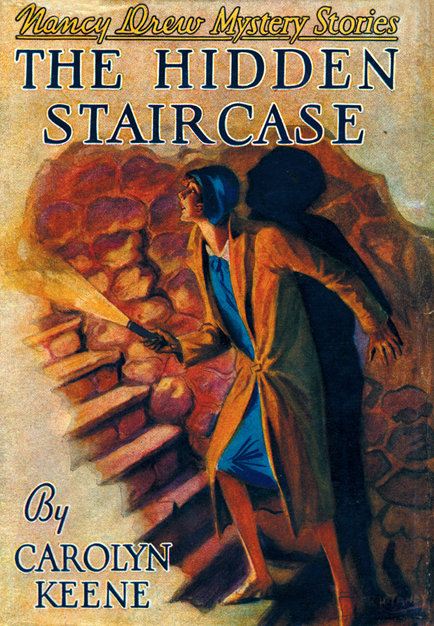
In the traditional sense, of course, from angels to zombies, mythical creatures abound in folklore around the world.  But just as a particular culture’s myths explain a society to itself, our personal myths explain ourselves to ourselves. We tell stories that make sense of who we are and the time we’ve spent on earth, stories we populate with beings that wax mythic in our minds. Each of us has our own creation story, our own explanations for how the world works, our own hero’s journey and our own idiosyncratic pantheon of mythical creatures.  Accordingly, just as Medusa and the Phoenix are mythical creatures, so are Nancy Drew and the Cheerleader I wanted to be in seventh grade and the Fuzzy Black Dog I found in Back of the Yards (who, by the way, I named Phoenix).  These entities are “mythical” because they’re larger-than-life characters that populate the stories we tell and retell about ourselves, and “creatures” because in the telling they become either more-than or not-quite human.  We keep coming back to them.  Whether persecutors or protectors, they become important in our understanding of why things are the way they are, in our understanding of ourselves.

The full title of this book I’m writing is The Saltwater Twin and Other Mythical Creatures. In it, I introduce some of my own mythical creatures, describe the circumstances that brought each of them to life and tell what part they played in my story after that.

I hope that my own “set of stories, traditions and beliefs” will resonate with readers, each with their own collection of myths and pantheon of mythical creatures.

What are yours?

good habits

We first make our habits, and then our habits make us.
John Dryden

150 minutes/day x 6 days = 15 hours/week

That’s my writing formula. I’m currently working on getting in 15 hours of writing a week. My goal is to get to 16, two full workdays worth.  It feels like a good number.

I started with 10 minutes a day.  This was a few years ago.  Sitting down to write was a challenge. It meant trudging through difficult drafts and fending off the barrage of nasty voices that said I was wasting my time, I’d never be any good, I was deluded if I thought I could write something anyone would ever want to read. So naturally, I dragged my heels.  But I wanted to write things.  I wanted to start them and finish them. And the ideas banging around my brain were quite rowdy and insistent.  So I started with a goal of writing for 10 minutes a day.  That felt doable.  Easy, even. 10 minutes a day, 6 days a week. Done and done. With this small change, something big shifted.  Instead of feeling overwhelmed by the distance between what I wanted to accomplish and where I was at any given moment, I started to feel competent and capable of even bigger things.

I had read somewhere that it takes three weeks for a new habit to take root.  So I decided that after 3 weeks of writing 10 minutes a day, I would graduate to 15 minutes, then 20 and so on until I made it to 160 minutes a day, 6 out of 7 days – in other words, 16 hours a week. Again, adding just 5 minutes every three weeks felt doable, easy even. Since then I’ve read that the 21-days-to-a-habit number is pretty arbitrary, and they think it’s more like 66. Nonetheless, I’ve made it to 15 hours a week, 3 weeks at a time. Sometimes it’s still tough to sit down and do the work, but sometimes I can’t wait to get cracking. Oh, also there are prizes for reaching a 3-week benchmark. I like prizes.

Kooky though it may seem, this strategy has made me smarter about how I use my time. As a freelance teaching artist, I have lots of unstructured time that I have to divvy up to accommodate the various tasks I need to accomplish. Too often, writing used to be last on the list, squeezed into whatever time was left over, after lessons were planned, bills paid, laundry washed.  Now it’s the first thing I find time for.  I look at my day and see, oh, I’m teaching two classes and I have to plan a lesson, so when can I write?  Or, I have a really full week ahead, so I’ll have to get in lots of writing hours this weekend.  Some days it’s just not possible to fit in 150 minutes (2 ½ hours for the arithmetically challenged), but the idea is to make sure my daily totals add up to my weekly goal. And I’m happy to say it’s become a habit.

Tell me how you carve out space and time for your work.  How do you make it a habit?

finding the trail

Image

Friends, I love me some research.

It’s just so satisfying finding stuff out about stuff.

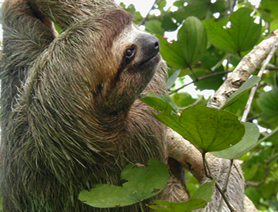
While writing this latest chapter, I’ve looked up the paleo-diet which recommends that you eat the way our Paleolithic hunter-gatherer ancestors supposedly did (my favorite proponent is this guy whose catchphrase is “Die biting the throat;” you can get it on a t-shirt!), Isaiah 11: 6-8 (The wolf shall lie down with the lamb and so on), Quakers, how long it takes to grill a rare steak, if fish are capable of feeling pain, evolution and natural selection and, as I wrote about in this space a couple weeks ago, predatory animals, especially the ones that sometimes eat humans.

I’ve come to think that even if it seems like procrastination at times, research is a fundamental part of my writing process.  I’m trying to emulate one those super wilderness scouts who can look at the-ever-so-slightly-bent twig or the barely-there footprint and gauge exactly how far off whatever you’re looking for is and what it had for lunch.

Admittedly, I do sometimes get a bit sidetracked.  The other day I was looking up Edward Hicks’ famous painting “The Peaceable Kingdom,” which my mom always used to take us to see at the National Gallery of Art in D.C., and which always fascinated me not only because of the animals’ really odd expressions but also because they were playing with those weird-looking, early American folk art babies…Image

and then I had to read about Quakers because Edward Hicks was a famous Quaker and then I started thinking, wow, I’ve always thought Quakers were really cool and maybe I should be a Quaker and then I started looking up Quaker meetings in Chicago —

that was maybe a tich off the beaten path.

So I try to balance research and writing.  But when I stumble across some semi-hidden sign, catch a trace scent in the air that leads me to a brand new thought or connection or story, it’s really kind of thrilling.  I don’t know if I’ll find exactly what I’m looking for (a thorough understanding of why and how everything in the world universe is what it is and does what it does) but at least I’ll have an account of the expedition.

Adventures in Storytelling

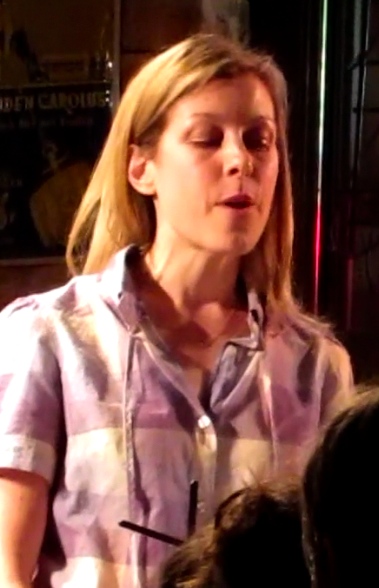
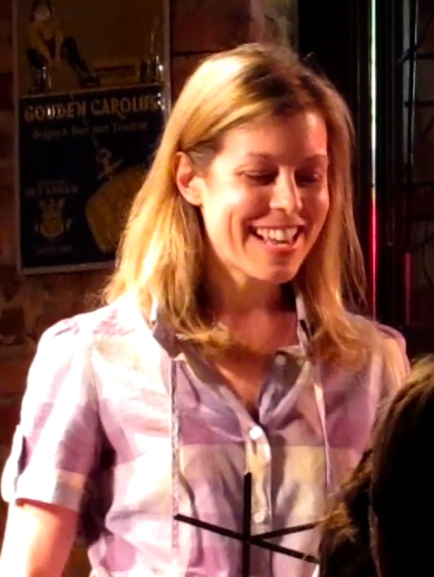
This book writing thing is a long, solitary haul, and it gets lonesome in my living room.  So in an effort to take the edge off my self-imposed quarantine, I decided to read something.  In public.  I investigated storytelling nights around the city, and there are lots of them.  I recommend checking some out.  It’s a lovely way to spend an evening; it feels so pleasantly classic to be drinking a pint and listening to a story. Anyway, I was offered a spot at This Much Is True, a storytelling series at the Hopleaf.And despite being wicked nervous, last Tuesday night I read an excerpt from a chapter called We Got Spirit! It was fun. They liked it. I’m going to do more. I’ll keep you posted here.  Here is an excerpt from the excerpt:

In seventh grade, my desire to play an orphan in a touring production of Annie was supplanted by an ardent wish to become a cheerleader.  I coveted the little white socks and beribboned ponytails, the thigh-skimming skirts with those sharp kick pleats and the spankies they wore underneath that were neither underpant nor bathing suit but something far more exotic than either.  Cheerleaders intoxicated every boy above third grade. I, on the other hand, was socially awkward and bookish, but I thought I might have a chance of getting on the team because I could almost do the splits.  I mean, it was really close.  Unless you looked super carefully, you’d probably think I was completely doing them.  Also, I could land in the almost-splits from a cartwheel or jump. I didn’t excel at jumping in general; I was largely unsuccessful both at achieving much height and at executing the mid-air herkies and pikes. I was good at that Presidential Fitness flexed arm-hanging test where you had to hold your chin above a bar because I was gritty and didn’t let go of things easily. Anything that pitted grim determination against gravity, I was prepared to kick ass.  Jumping, however, outwitted me. I was very sad in seventh grade.  Maybe being sad makes it hard to get off the ground.

I wanted to be happy.  And there was something about cheerleaders that made it seem like they might know how. It wasn’t just that they got attention from boys – or guys as they were suddenly called, as in, do you like any guys in our class, because I think Matt Hendricks totally likes you.  By the way, this new development, among others – like needing to wear shorts under your skirt so no one would see your underwear by accident – was honestly a little bewildering to me. But with their bright colors and staccato claps and their “Ready, okay,” cheerleaders seemed to be truly okay and ready for whatever life intended to throw at them. It was a mystery I didn’t know how to unlock:  the mystery of cheer.

wild truth

I love this quote:

Philosophy is really there to redeem what lies in an animal’s gaze.                                                                                                    – Theodor Adorno

It’s the epigraph of the book I just read by Gordon Grice called The Book of Deadly Animals.  I’m working on a chapter about survival — the ways we find to keep our physical and emotional selves intact.  At least I think that’s what it’s about.  When I start a chapter I don’t know exactly where it’s going to wind up. I have a murmuring in my head — words, images, fragments of stories.  I have to investigate this murmuring and see what kinds of connections develop.  Thinking about survival led me to predator and prey.  Hence the rather bloody research.

The idea for this chapter started with me remembering the way I thought about animals when I was a kid — a certain look my uncle’s dog had in his eye that suggested to me a different way of knowing the world.  Then I started wondering about the ways we are animal — the ways we hide and protect, fight and defend, nest and mark our territories, the ways we communicate with one another outside of language.

The chapter is also about being a kid and becoming aware that although the world is home to abundant beauty, it can also be brutal.  It’s about how I struggled (and struggle) with that awareness.  So I’m reading about predators and prey, watching old episodes of Mutual of Omaha’s Wild Kingdom on youtube and writing about tooth and claw and hunger and flight.  I think writing for me sometimes is an effort to articulate things I know but don’t yet know that I know.  So I like that quote about philosophy somehow being an attempt to recover or uncover a wild truth, to know something about ourselves we didn’t know we knew. And I like that the key to that truth might lie in the gaze of an animal.

In Praise of Slowness

I’ve been working on The Saltwater Twin for about a year now in earnest.  I’m about halfway there, I think, and I’m impatient.  It’s slow going. I get antsy when I finish yet another draft of a chapter and realize it’s still not done.  I have to go back and work on it some more.  Maybe even set it aside and come back to it in a few days or weeks.  It is a little-by-little process of finding a path forward, looping back around, creeping forward again.  I write many, many drafts. There are pages of typed and penned rambling that end up discarded, but lead to what will stay in the end.  Sometimes there is research to be done.  And of course there are mundane distractions like laundry, groceries, dog walks and earning a living.

So I have noticed a couple things.  1. Being impatient does not make me write better or faster.  It just ratchets up my anxiety, and I am not a big fan of anxiety. 2. I think I am a little bit slow by nature.  As a kid I was always getting left behind in museum exhibits.  I liked to amble and think and explore till someone came to scold me for lollygagging and herd me back to the rest of the group.

So, in light of 1 and 2,  I’m going to try to be okay with being slow.  Maybe even embrace it.  And though I’m impatient about wanting to see how this whole book thing is going to turn out, I’m going to try to pay attention to how it is to be in the thick of these green and growing leaves right now.  It’s not a bad place to be.

Gonna Fly Now…or 72 Steps

Image

I have a picture of Rocky as my desktop image — a still from when he’s just run through Philadelphia in his gray sweatsuit and black wool cap, sprinted up the steps of the Philadelphia Museum of Art and triumphantly raised his hands in the air.  This is to make me believe I can do this.  I am working on a book, and I’m maybe about halfway through.  It came about as a result of winning a national non-fiction writing contest held by Glamour magazine.  Along with a 5K prize came a very fancy lunch (including a carrot marshmallow amuse bouche) with Glamour editors and some interest in my work from agents in NYC.  So I decided to keep writing essays, enough to put together a collection.  It’s going to be called The Saltwater Twin and Other Mythical Creatures.  (More on that later.) So here I am, about a year in and halfway through and it is sometimes hard to keep believing that I will make it up the steps. (And that’s just the writing the book part; then comes the publishing journey.)  So I have Rocky on my desktop.  Also my friend Lindsay who believes this will happen.  Sometimes it’s helpful to have someone believe something for you when you’re finding it a bit impossible.  And, I suppose, to be a little bit thrilled about the small achievements along the way…every step.