tarry a moment

My evil genius Procrastination has whispered me to tarry ’til a more convenient season.
Mary Todd Lincoln

Oh, Mary Todd, you were so right.  Procrastination is an evil genius. Once I procrastinated by looking up procrastination. It derives from the Latin, procrastinare, to delay until tomorrow. Synonyms: delay, put off doing, adjourn, be dilatory, cool, dally, dawdle, defer, drag, drag one’s feet, give the run around, goldbrick, hang fire, hesitate, hold off, lag, let slide, linger, loiter, pause, play a waiting game, play for time, poke, postpone, prolong, protract, retard, shilly-shally, stall, stay, suspend, tarry, temporize, wait…

I am actually not procrastinating today.  At least not right this minute. I’m writing this blog post just like I said I would, and then I’m going to work on revisions for chapters one and two of The Saltwater Twin. But sometimes I do.  Procrastinate.  It happens. And it comes in so many flavors. Here, for your delectation, or in case you are interested in procrastinating yourself, are some of my favorite interwebs spots to visit when I ought to be doing other things.

At the speech accent archive you can listen to people speaking English with almost any accent under the sun. Why do I love this so much?  I don’t know.  But I do.

Here are the sounds of so many kinds of animals.  Extra fun: turn up the volume if you have a dog (maybe even a cat) and watch him cock his head to the side. Also, here’s where to find out what people say in different languages to mimic animal sounds.

Watch the All Blacks rugby team doing the haka on youtube. This makes me very happy.
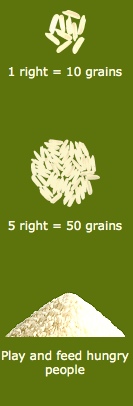


At freerice.com you can take quizzes and donate rice.  Genius.

Browse etsy.com to buy one of a kind things and support artisans and craftspeople all over the world.


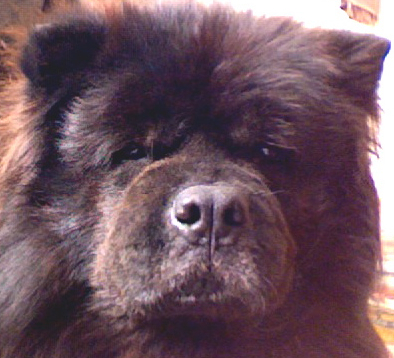
Look at cute animals.  It raises your endorphins. So it’s actually good for you. And it will probably help you do a better job on whatever it is you finally intend to get around to doing.

I think a little procrastination is okay. Growing crops season after season without a break depletes the soil. Farmers let a field lie fallow to allow the land to renew itself. So I try not to be mad at myself when procrastination happens, and I try to build in some time for it so I don’t snap and go on a three-day bender.

How about you?  Favorite flavors of procrastinating?
mythical creatures

One of the definitions of mythology is “a set of stories, traditions, or beliefs associated with a particular group or the history of an event, arising naturally or deliberately fostered.” I think we each have our own personal mythologies. They both arise naturally from the circumstances of our lives and they are fostered – maybe not deliberately, but fostered nonetheless – by each of us, depending on what we need to remember and how we need to remember it.

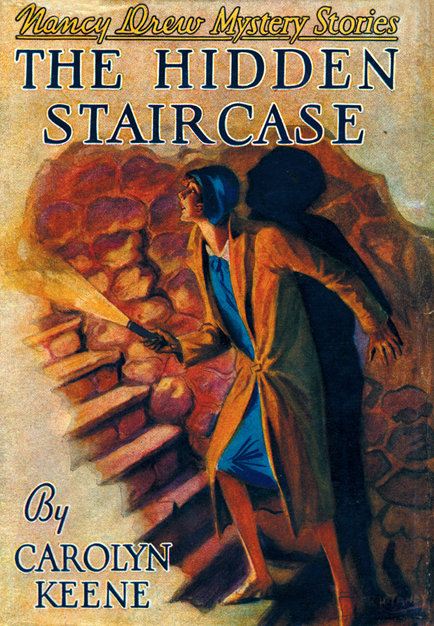
In the traditional sense, of course, from angels to zombies, mythical creatures abound in folklore around the world.  But just as a particular culture’s myths explain a society to itself, our personal myths explain ourselves to ourselves. We tell stories that make sense of who we are and the time we’ve spent on earth, stories we populate with beings that wax mythic in our minds. Each of us has our own creation story, our own explanations for how the world works, our own hero’s journey and our own idiosyncratic pantheon of mythical creatures.  Accordingly, just as Medusa and the Phoenix are mythical creatures, so are Nancy Drew and the Cheerleader I wanted to be in seventh grade and the Fuzzy Black Dog I found in Back of the Yards (who, by the way, I named Phoenix).  These entities are “mythical” because they’re larger-than-life characters that populate the stories we tell and retell about ourselves, and “creatures” because in the telling they become either more-than or not-quite human.  We keep coming back to them.  Whether persecutors or protectors, they become important in our understanding of why things are the way they are, in our understanding of ourselves.

The full title of this book I’m writing is The Saltwater Twin and Other Mythical Creatures. In it, I introduce some of my own mythical creatures, describe the circumstances that brought each of them to life and tell what part they played in my story after that.

I hope that my own “set of stories, traditions and beliefs” will resonate with readers, each with their own collection of myths and pantheon of mythical creatures.

What are yours?

good habits

We first make our habits, and then our habits make us.
John Dryden

150 minutes/day x 6 days = 15 hours/week

That’s my writing formula. I’m currently working on getting in 15 hours of writing a week. My goal is to get to 16, two full workdays worth.  It feels like a good number.

I started with 10 minutes a day.  This was a few years ago.  Sitting down to write was a challenge. It meant trudging through difficult drafts and fending off the barrage of nasty voices that said I was wasting my time, I’d never be any good, I was deluded if I thought I could write something anyone would ever want to read. So naturally, I dragged my heels.  But I wanted to write things.  I wanted to start them and finish them. And the ideas banging around my brain were quite rowdy and insistent.  So I started with a goal of writing for 10 minutes a day.  That felt doable.  Easy, even. 10 minutes a day, 6 days a week. Done and done. With this small change, something big shifted.  Instead of feeling overwhelmed by the distance between what I wanted to accomplish and where I was at any given moment, I started to feel competent and capable of even bigger things.

I had read somewhere that it takes three weeks for a new habit to take root.  So I decided that after 3 weeks of writing 10 minutes a day, I would graduate to 15 minutes, then 20 and so on until I made it to 160 minutes a day, 6 out of 7 days – in other words, 16 hours a week. Again, adding just 5 minutes every three weeks felt doable, easy even. Since then I’ve read that the 21-days-to-a-habit number is pretty arbitrary, and they think it’s more like 66. Nonetheless, I’ve made it to 15 hours a week, 3 weeks at a time. Sometimes it’s still tough to sit down and do the work, but sometimes I can’t wait to get cracking. Oh, also there are prizes for reaching a 3-week benchmark. I like prizes.

Kooky though it may seem, this strategy has made me smarter about how I use my time. As a freelance teaching artist, I have lots of unstructured time that I have to divvy up to accommodate the various tasks I need to accomplish. Too often, writing used to be last on the list, squeezed into whatever time was left over, after lessons were planned, bills paid, laundry washed.  Now it’s the first thing I find time for.  I look at my day and see, oh, I’m teaching two classes and I have to plan a lesson, so when can I write?  Or, I have a really full week ahead, so I’ll have to get in lots of writing hours this weekend.  Some days it’s just not possible to fit in 150 minutes (2 ½ hours for the arithmetically challenged), but the idea is to make sure my daily totals add up to my weekly goal. And I’m happy to say it’s become a habit.

Tell me how you carve out space and time for your work.  How do you make it a habit?